Maher al-Assad, Republican Guard chief
 |
| Maher (left) is said to have helped persuade Bashar (right) to put an end to talk of reform |
Born in 1967, Maher studied at the University of Damascus. He later followed his older brother Basil into the military. Some thought he might be named Hafez's successor after Basil's death in 1994, but he was too young and Bashar was chosen.
Before his promotion to general, Maher commanded a Republican Guard brigade. This provided him with valuable military experience and allowed him to establish personal ties with many officers.
In 2000, shortly after Bashar became president, Maher became a member of Baath Party's second highest body, the Central Committee.
He has a reputation for being excessively violent and emotionally unstable, and allegedly shot and wounded his brother-in-law, Asef Shawkat.
In 2000, Maher is reported to have helped persuade Bashar to put an end to the political openness seen during the first few months of his rule - the short-lived "Damascus Spring". Years of suppression followed.
Three years later, Israeli media said Maher had attended a series of informal meetings in Jordan with the director of Israel's foreign minister and two Israeli-Arab businessmen to discuss resuming peace talks.
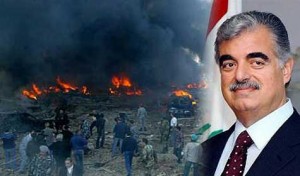
In 2005, Maher and Shawkat were both mentioned in a preliminary report by UN investigators as one of the people who might have planned the assassination of the former Lebanese Prime Minister, Rafik Hariri.
When mass pro-democracy protests began in the southern city of Deraa in March 2011, Maher's fourth armoured division - a successor to Rifaat al-Assad's Defence Brigades which is deployed on Syrian territory bordering the Israeli-occupied Golan Heights, and controls the capital's approaches - was sent in to crush them. Human rights activists say dozens of people have since been killed.
At one protest in Deraa, many shouted slogans denouncing Maher, including: "Maher you coward. Send your troops to liberate the Golan."
By late April, witnesses said the fourth division's tanks had cut off Deraa and were shelling residential areas, while troops were storming homes and rounding up people believed to have been taking part in the protests.
The US subsequently announced sanctions against Maher, saying the fourth division had "played a leading role in the Syrian regime's actions in Deraa". The EU also imposed sanctions on Maher, describing him as the "principal overseer of violence against demonstrators".
Rumours persist that Maher might challenge his brother's rule - much like his uncle Rifaat attempted to seize power from Hafez in 1983 - but there is no evidence that he has sufficient power to challenge his rule.
Asef Shawkat, deputy chief of staff of the armed forces
Gen Shawkat was considered one of the president's top security chiefs.
However, he was replaced in 2010 as head of Military Intelligence and made deputy chief-of-staff of the armed forces. Although he was also promoted, opposition figures said he was seen to have been at fault in the 2008 assassination of Hezbollah military commander Imad Mughniyeh in an area of Damascus that fell under his responsibility.
 |
| The US said Asef Shawkat was a fundamental contributor to Syria's policy to foment terrorism |
Analysts disagreed, however, saying there was no political significance and that preparations were in fact being made to appoint Gen Shawkat chief-of-staff of the armed forces or defence minister.
Born in 1950 to a middle-class Alawite family in Tartous, he studied law at Damascus University. He joined the army in the late 1970s.
He rose through the ranks, but his fortunes changed spectacularly in the mid-1990s when he married Hafez al-Assad's only daughter, Bushra - despite misgivings from within the Assad family because he was a divorced father-of-five who was 10 years her senior. They eloped after the death of Basil al-Assad, who had objected to the match.
After receiving the blessing of Hafez, he was welcomed into the family and built a close relationship with Bashar. Bushra reportedly nurtured the relationship through her influential role as the president's secretary.
Former Vice-President Abdul Halim Khaddam said Gen Shawkat was a "smart, cultivated, and courageous officer with great ambitions", who had established ties with intelligence chiefs and other powerbrokers.
But there were reports of friction with Bashar's younger brother, Maher, who is alleged to have shot him in the stomach in 1999. He was allegedly flown to Paris for treatment at a military hospital.
Gen Shawkat later became the de facto chief of military intelligence, a title he officially acquired in 2005.
After the 11 September 2001 attacks, Gen Shawkat was one of the president's main liaisons to intelligence agencies in the US and Europe and helped set up a US intelligence operation in Syria, which was later shut down after relations between the two countries soured.
In 2005, Maher and Shawkat were both mentioned in a preliminary report by UN investigators as one of the people who might have planned the assassination of the former Lebanese Prime Minister, Rafik Hariri.
The next year, Gen Shawkat was named a Specially Designated National (SDN) by the US, allowing his assets to be frozen. It said he had "been a key architect of Syria's domination of Lebanon, as well as a fundamental contributor to Syria's long-standing policy to foment terrorism".
Rami Makhlouf
A first cousin of Bashar al-Assad, Mr Makhlouf is arguably the most powerful economic figure in Syria. He has been the subject of persistent accusations of corruption and cronyism, and analysts say no foreign companies can do business in Syria without his consent.
 |
| Rami Makhlouf insists his businesses are legitimate and provide employment for thousands of Syrians |
In 2001, he and the Egyptian telecommunications company, Orascom, were awarded one of Syria's two mobile phone operator licences. After a court dispute over control of Syriatel, Orascom was forced to sell its 25% stake.
When Riad Seif, an opposition MP, criticised the "irregularities" in the awarding of the phone licences, he was arrested and imprisoned.
In addition to Syriatel, Mr Makhlouf is believed to control two banks, free trade zones, duty free shops, a construction company, an airline, two TV channels, and imports luxury cars and tobacco. He also owns shares in and is vice-chairman of Cham Holding, considered Syria's largest private company, and has stakes in several oil and gas companies.
In 2008, the US treasury banned US firms and individuals from doing business with Mr Makhlouf, and froze his US-based assets. It accused him of "corrupt behaviour", "disadvantaging innocent Syrian businessmen and entrenching a regime that pursues oppressive and destabilising politics".
"Makhlouf has manipulated the Syrian judicial system and used Syrian intelligence officials to intimidate his business rivals. He employed these techniques when trying to acquire exclusive licenses to represent foreign companies in Syria and to obtain contract awards," a statement said.
"Despite President Assad's highly publicised anti-corruption campaigns, Makhlouf remains one of the primary centres of corruption in Syria."
The US imposed sanctions on Mr Makhlouf's younger brother, Hafez- a senior official in the General Security Directorate - in 2007 for his connection with efforts to reassert Syrian control over Lebanon.
Former Vice-President Abdul Halim Khaddam said in 2009 that Bashar's rule had been marked by "transforming corruption into an institution" headed by Mr Makhlouf. He said corruption, suppression of dissent, and economic hardship were pushing Syrians over the edge.
Two years later, anti-government protesters in Deraa initially directed their wrath at Mr Makhlouf, some chanting: "We'll say it clearly, Rami Makhlouf is robbing us". A branch of Syriatel in Deraa was set on fire.
Opposition websites later accused Mr Makhlouf of financing pro-government demonstrations both across Syria and abroad, by providing flags, meals and money for those participating.
In May 2011, the EU imposed sanctions against Mr Makhlouf, saying he was an "associate of Maher al-Assad" who "bankrolls the regime allowing violence against demonstrators".
The tycoon insists his businesses are legitimate and provide professional employment for thousands of Syrians.
Following the US sanctions announcement in 2007, he told the BBC that the designation was tantamount to "a medal we hang on our chest", and was part of a "political ploy aimed at undermining important individuals".
Abdul Fatah Qudsiya, head of Military Intelligence
Gen Qudsiya is the head of Military Intelligence, the paramount security agency in Syria, which has a reputation for ruthless efficiency and whose leaders have wielded considerable influence over presidents.
As well as strategic and tactical intelligence, the agency has a critical role of ensuring the leadership's physical security and the loyalty of the army.
Before replacing the president's brother-in-law Asef Shawkat sometime between 2005 and 2009, he was head of Air Force Intelligence.
Earlier in his career, Gen Qudsiya - an Alawite born in 1953 - served as head of the Republican Guard's security office, and as personal secretary to the president.
Gen Qudsiya was asked in 2008 to lead the security committee investigating the assassination of Hezbollah military commander Imad Mughniyeh in Damascus. The committee notably did not include Gen Shawkat, who was criticised for failing to prevent the killing.
In May 2011, Gen Qudsiya was included in a list of Syrian officials subjected to EU sanctions for their roles in violence against protesters. Military Intelligence is said to have played a prominent role in the crackdown, firing on crowds of protesters and killing a large number of civilians.
The US also imposed sanctions on Gen Qudsiya later that month, accusing his agency of using force against and arresting demonstrators participating in the unrest.
Ali Mamluk, head of the General Security Directorate
Born in 1946, Lt Gen Mamluk is head of the General Security Directorate (State Security), which plays an important role in quelling internal dissent.
He has served in the post since 2005, during which he was involved in some of the most sensitive issues concerning Syria. Before that he was deputy head of Air Force Intelligence.
A leaked US classified diplomatic cable discussing whether to impose financial sanctions on Gen Mamluk in 2007 said he was well known for his "objectionable activities regarding Lebanon, and his suppressing Syrian civil society and the internal opposition". The embassy in Damascus said sanctions against Gen Mamluk would "resonate well" in the country.
Despite this, Gen Mamluk discussed efforts to increase co-operation between Washington and Damascus on terrorism issues at a surprise meeting with US diplomats in 2010, according to a leaked US classified cable. He said the GSD had been more successful at fighting terrorism in the region because "we are practical and not theoretical".
In April 2011, the US government imposed sanctions on Gen Mamluk, saying he had been responsible for human rights abuses, including through the use of violence against civilians.
His agency had repressed internal dissent, monitored individual citizens, and had been "involved in the Syrian regime's actions in Deraa, where protesters were killed by Syrian security services", it alleged.
The next month, the EU also imposed sanctions on Gen Mamluk, saying he had been involved in efforts to crush anti-government protesters.
A Sunni, he is said to be on good terms with all of Syria's intelligence agencies - the heads of Air Force Intelligence and the Political Security Directorate were once his assistants.
Jamil Hassan, head of Air Force Intelligence
Maj Gen Hassan replaced Abdul Fatah Qudsiya as head of Air Force Intelligence in 2009. Though smaller than Military Intelligence, AFI is seen by some as the elite agency of Syria's intelligence empire. The agency owes its power to Hafez al-Assad, who was air force chief before coming to power in a coup. It plays a leading role in operations against Islamist opposition groups, as well as covert actions abroad, and has a reputation for brutality.
Gen Hassan, an Alawite, previously served as a security official in the eastern governorate of Deir al-Zour.
In late April 2011, personnel from Air Force Intelligence fired tear gas and live ammunition to disperse crowds of demonstrators who took to the streets in Damascus and other cities after noon prayers, killing at least 43 people, according to the US.
The next month, the EU said Gen Hassan was "involved in the repression against the civilian population" during the recent anti-government unrest, and imposed a travel ban and asset freeze on him.
Mohammed Dib Zaitoun, head of the Political Security Directorate
Maj Gen Zaitoun, a Sunni born in 1951, is the head of the Political Security Directorate (PSD), according to the United States and European Union.
The civilian agency is responsible for monitoring organised political activity, including surveillance of registered parties and political publications. It also has a regional surveillance brief, covering Arab, Palestinian and Israeli affairs.
Before taking up his current post in 2009, Gen Zaitoun was deputy head of the General Security Directorate (GSD).
In 2008, he was asked - along with other members of the president's inner circle - to investigate the assassination of Hezbollah's Imad Mughniyeh in Damascus.
In May 2011, the EU accused Gen Zaitoun of involvement in violence against demonstrators, and announced a travel ban and asset freeze. The US also imposed sanctions on him later that month, accusing him of human rights abuses.
Zuhair Hamad, deputy head of the General Security Directorate
Maj Gen Hamad is deputy to Ali Mamluk, the head of the powerful General Security Directorate.
He previously led its Special Intelligence Unit, he was responsible for monitoring newspapers, television channels and websites covering Syria, and writing daily reports for high-ranking officials. Opposition sources said he often summoned journalists for "clarification" on their stories, and accused him of often resorting to blackmailing them to limit criticism of the regime.
Human rights activists say Gen Hamad played a major role in the campaign of arrests against opposition and independent figures which intensified in the months leading up to the recent anti-government unrest.
Some consider him a rising star within Syria's security agencies.
Hafez Makhlouf, head of General Security Directorate in Damascus
Col Makhlouf is head of the Damascus branch of the General Security Directorate, the overarching civilian intelligence service in Syria.
Born in 1971, he is a maternal cousin and childhood friend of President Bashar al-Assad, and the brother of Rami Makhlouf.
Col Makhlouf is perhaps best known for being one of the two survivors of the high-speed car crash in 1994 that killed the president's elder brother, Basil, who was being groomed to succeed their father, Hafez.
In 2007, the US treasury department designated him an individual "furthering the Syrian regime's efforts to undermine Lebanese democracy" and froze his assets. It alleged that he had "supported the reassertion of Syrian control or otherwise contributed to Syrian interference in Lebanon". Syrian troops withdrew from Lebanon in April 2005 after a 29-year military presence.
In May 2011, the EU imposed sanctions on Col Makhlouf, saying he was "close to Maher al-Assad" had been "involved in violence against demonstrators" as head of the GSD's Damascus branch.
The US treasury department announced new sanctions against him later that month, saying he had been "given a leading role in responding to protests in Syria, and was heavily involved in the Syrian regime's actions in Deraa, where protesters were killed".
Opposition activists have said Col Makhlouf enjoys greater influence over the president than the head of the GSD, Ali Mamluk.
Mohammed Nasif Kheirbek, deputy vice-president for security affairs
Gen Kheirbek is a member of the Alawite Kalabiya tribe, to which Bashar al-Assad belongs. Their families are also connected by marriage - a relative is married to one of Rifaat al-Assad's daughters.
The general, who was born in 1937 and is reported to have medical problems, has long served the Syrian regime and remains an influential adviser to the president. He was a very close adviser to the late Hafez al-Assad before being appointed deputy director of the General Security Directorate (GSD) in 1999.
He served in the position until 2006, when he was named deputy vice-president for security affairs. The next year, the US froze his assets for "contributing to the government of Syria's problematic behaviour", which it said included support of international terrorism, the pursuit of weapons of mass destruction, and the undermining of efforts in Iraq.
A leaked US diplomatic cable described Gen Kheirbek as Syria's "point-man for its relationship with Iran". It said designating him could "heighten Syrian and regional concerns about the [government's] willingness to accommodate an expansionary Iranian agenda".
Hisham Ikhtiar, director of the National Security Bureau (NSB)
Born in 1941, Gen Ikhtiar is the head of the Baath Party Regional Command's National Security Bureau (NSB), which co-ordinates the work of Syria's intelligence agencies and formulates recommendations for the president. Between 2001 and 2005, he was in charge of the General Security Directorate.
In 2006, the US imposed financial sanctions on Gen Ikhtiar for "significantly contributing to the Syrian government's support for designated terrorist organisations", including Hezbollah. While at the GSD, Gen Ikhtiar directed activities that "significantly contributed to the Syrian government's military and security presence in Lebanon", it said. In 2007, he was included on a list of Syrians forbidden to enter US soil.
Gen Ikhtiar was reportedly charged with quelling the initial pro-democracy protests in Deraa. The brutal crackdown launched by the security services in the southern city helped trigger the recent nationwide unrest.
In May 2011, the US treasury department imposed sanctions on the National Security Bureau, saying it had directed Syrian security forces to use extreme force against demonstrators.
Dhu al-Himma Shalish, head of Presidential Security
Gen Shalish is Bashar's cousin and head of Presidential Security. He once owned SES International, which the US government alleged in 2005 was a "vehicle to put military goods into the hands" of former Iraqi leader Saddam Hussein and his regime.
He and his brother Asef, who managed SES, acted as a "false end user" for Iraq, helping to procure defence-related goods for the Iraqi military before the US-led invasion, it added. SES allegedly provided exporters with end-user certificates indicating Syria was the final destination, and then shipped them illegally to Iraq. He was said to have provided close personal assistance to Saddam's oldest son, Uday.
Ali Habib Mahmoud, minister of defence
Gen Habib was appointed defence minister in 2009, replacing Hassan Ali Turkumani. He previously served as chief-of-staff of the armed forces and is a decorated war veteran - he fought in the 1973 October War against Israel and led forces against Israeli troops invading Lebanon in 1982.

Born in 1939 in the coastal town of Tartous, Gen Habib joined the army in 1959 and worked his way up through the ranks before becoming major-general in 1986 and lieutenant-general in 1998. Between 1994 and 2000 he served as a commander of the Special Forces. He is a member of the Baath Party's Central Committee, its second most important body.
Before becoming defence minister Gen Habib was not particularly well-known outside Syria and even now, his profile remains low. But, he is one of a number of former and current officers with significant power.
The extent of Gen Habib's role in crushing the recent anti-government protests is not clear, but the army has been sent to major centres of unrest, including Deraa, Homs and Baniyas. Soldiers have been accused of killing innocent civilians and using tanks to shell residential areas.
In May 2011, the US accused Gen Habib of human rights abuses, and announced a travel ban and asset freeze.
Rustum Ghazali, head of Military Intelligence in Damascus Countryside
Gen Ghazali is the head of the Damascus Countryside branch of Military Intelligence, according to the European Union.
 |
| Rustum Ghazali was tasked with protecting Syrian interests in Lebanon between 2002 and 2005 |
Gen Ghazali assumed command in 2002, and was the "implementing agent of Syrian policies in Lebanon" until the Syrian withdrawal in 2005, according to the US treasury department. It accused Gen Ghazali of manipulating Lebanese politics to ensure officials and public policy remained committed to Syria's goals and interests. He reportedly used his influence to ensure former President Emile Lahoud's term of office was renewed, while Lebanon's military chiefs allegedly reported to him.
After the withdrawal from Lebanon little was heard of him. However, at the beginning of the protests in the city of Deraa, Gen Ghazali was sent by Bashar al-Assad to assure locals of the president's good intentions. He reportedly told them: "We have released the children" - a reference to several teenagers who were arrested for writing anti-regime graffiti inspired by the events in Egypt and Tunisia.
In May 2011, the EU said Gen Ghazali was head of Military Intelligence in Damascus Countryside (Rif Dimashq) governorate, which borders Deraa governorate, and was involved in the repression of dissent in the region.
Manaf Tlas, Republican Guard commander
The son of Mustafa Tlas - who served as defence minister for 33 years until he retired in 2004, and was a powerful supporter of the president following Hafez al-Assad's death - is said to be one of the president's closest friends.
He is currently a brigadier-general in the elite Republican Guard and became a member of the ruling Baath Party's Central Committee in 2000.
He reportedly introduced the president to members of the Sunni Muslim merchant class in an apparent attempt to broaden his base of support. His brother, Firas, is a prominent businessman.
In 2005, he told the Washington Post that Syria needed reform, but cautioned: "You need time. You need years. There's a generation you have to push forward." He argued that President Assad was still the reformers' best hope. The opposition dismissed his comments as a lie.
Mr Tlas reportedly held unsuccesful talks with opposition leaders following the outbreak of anti-government unrest in March 2011.